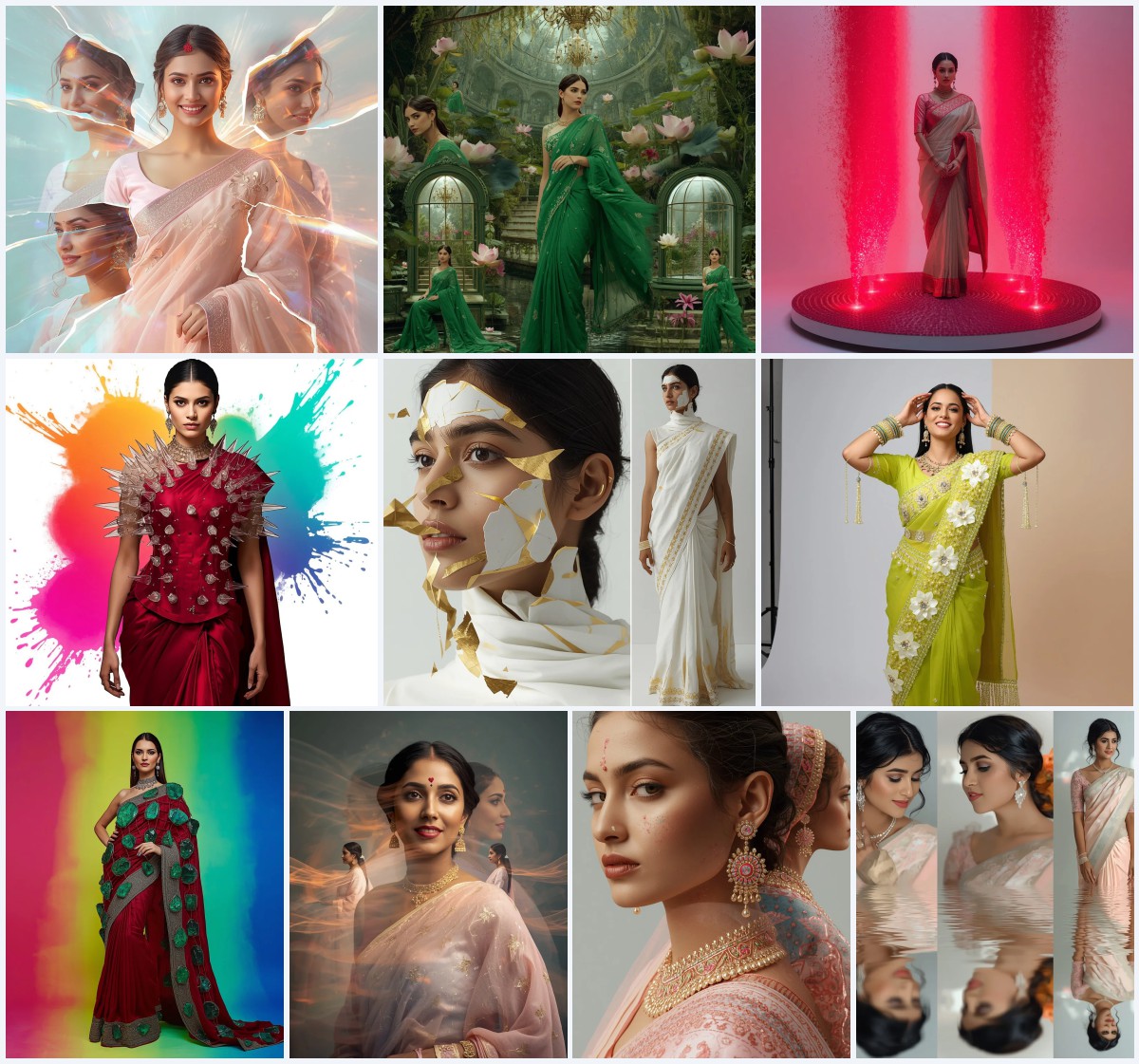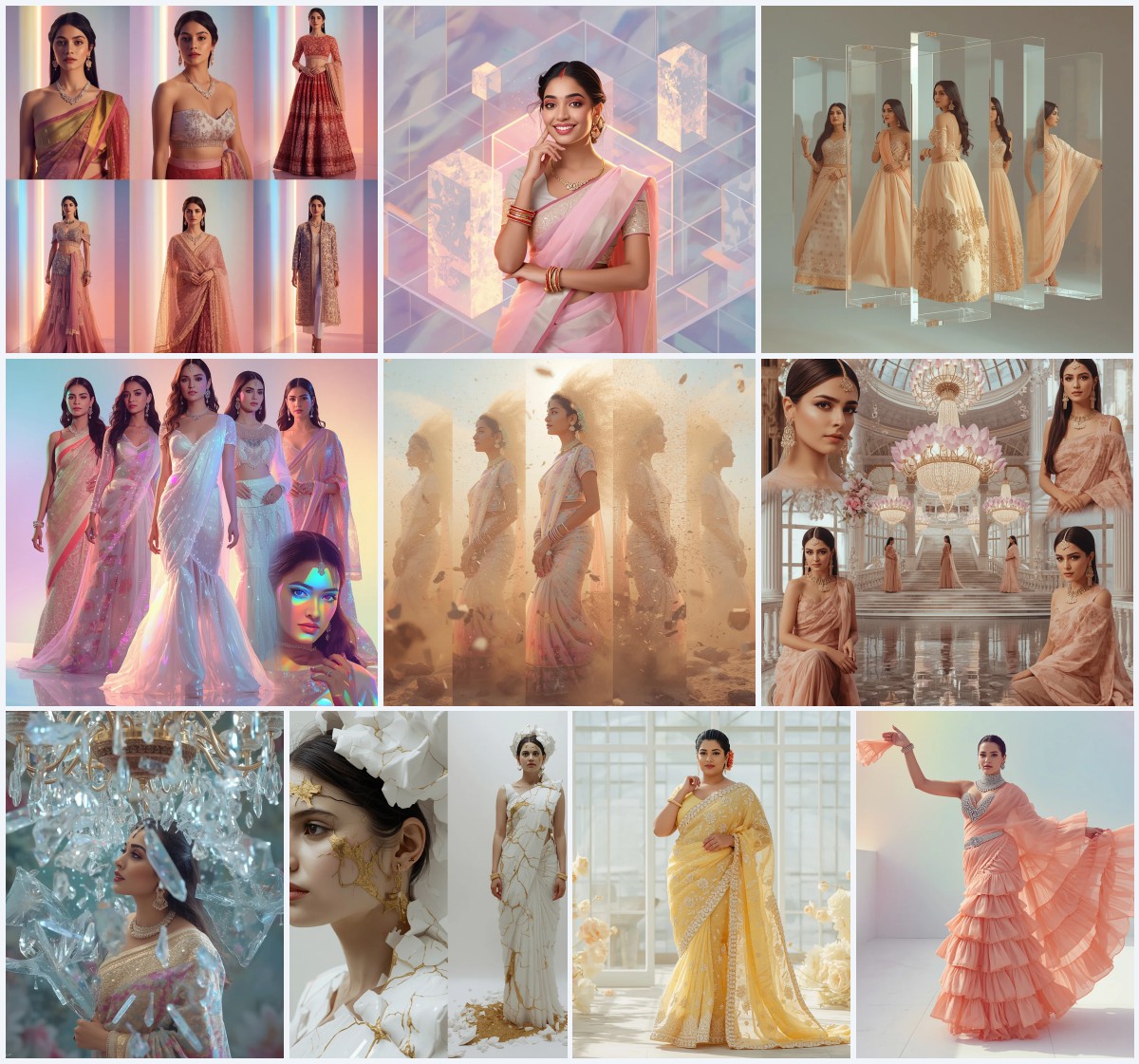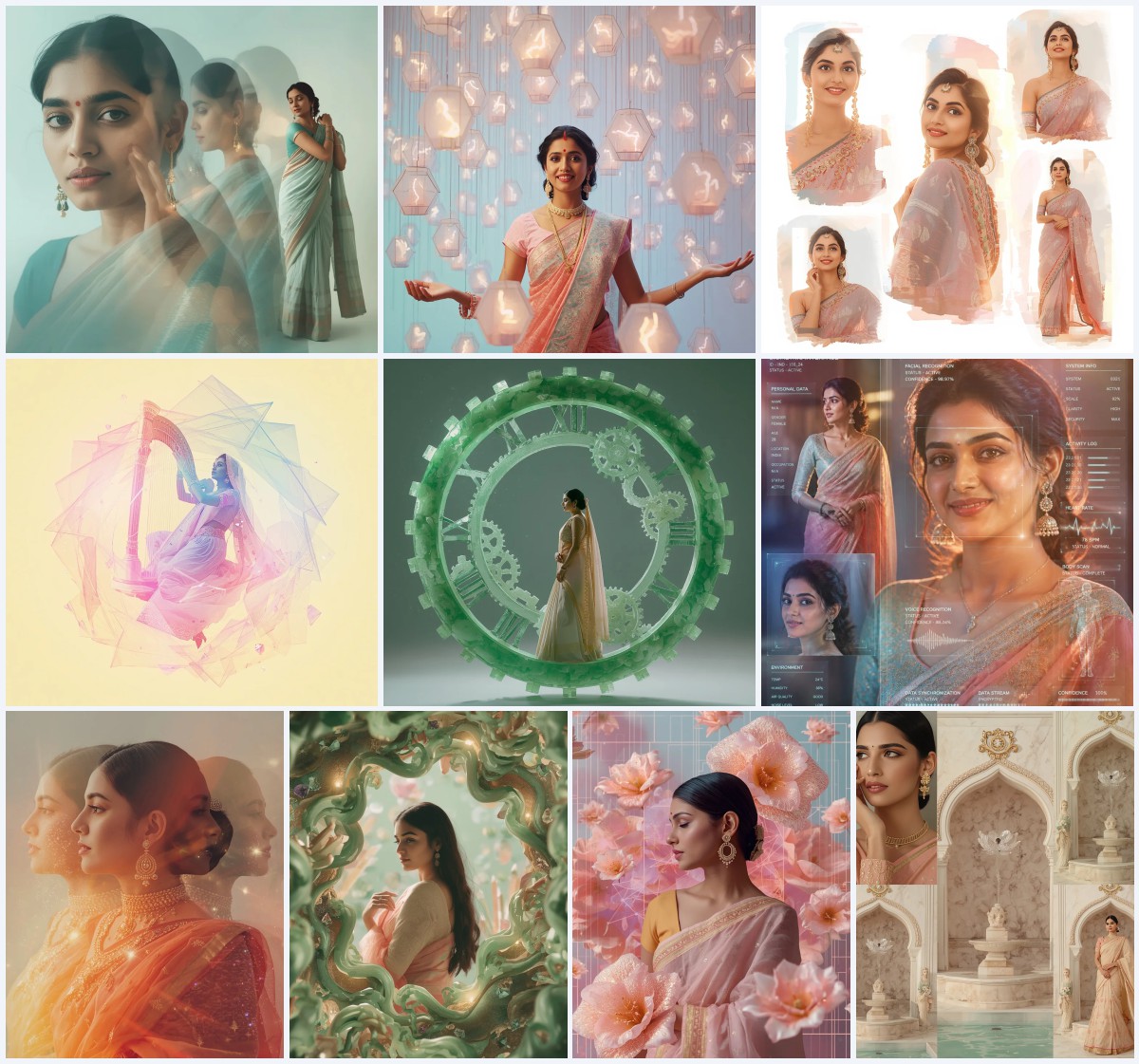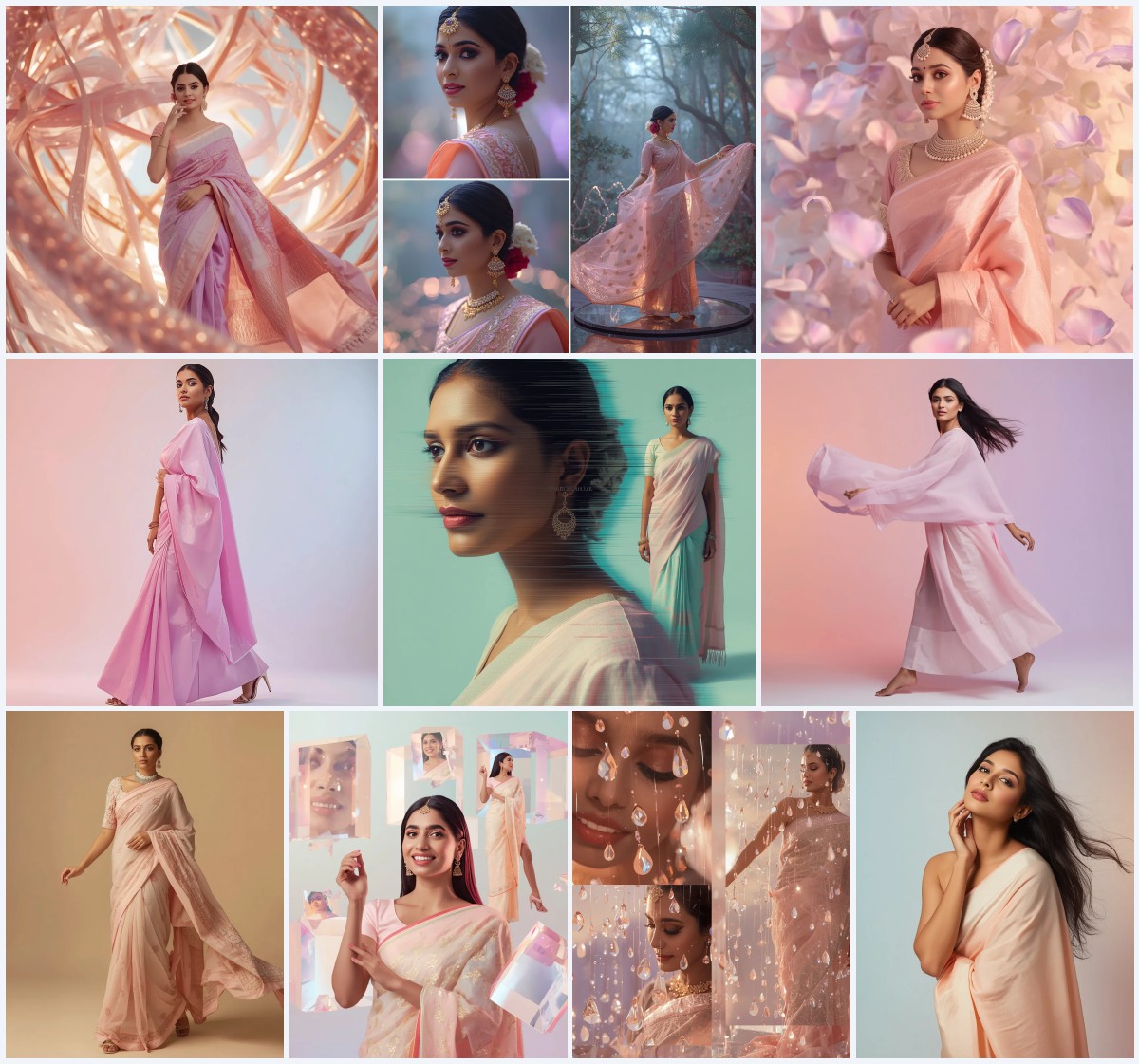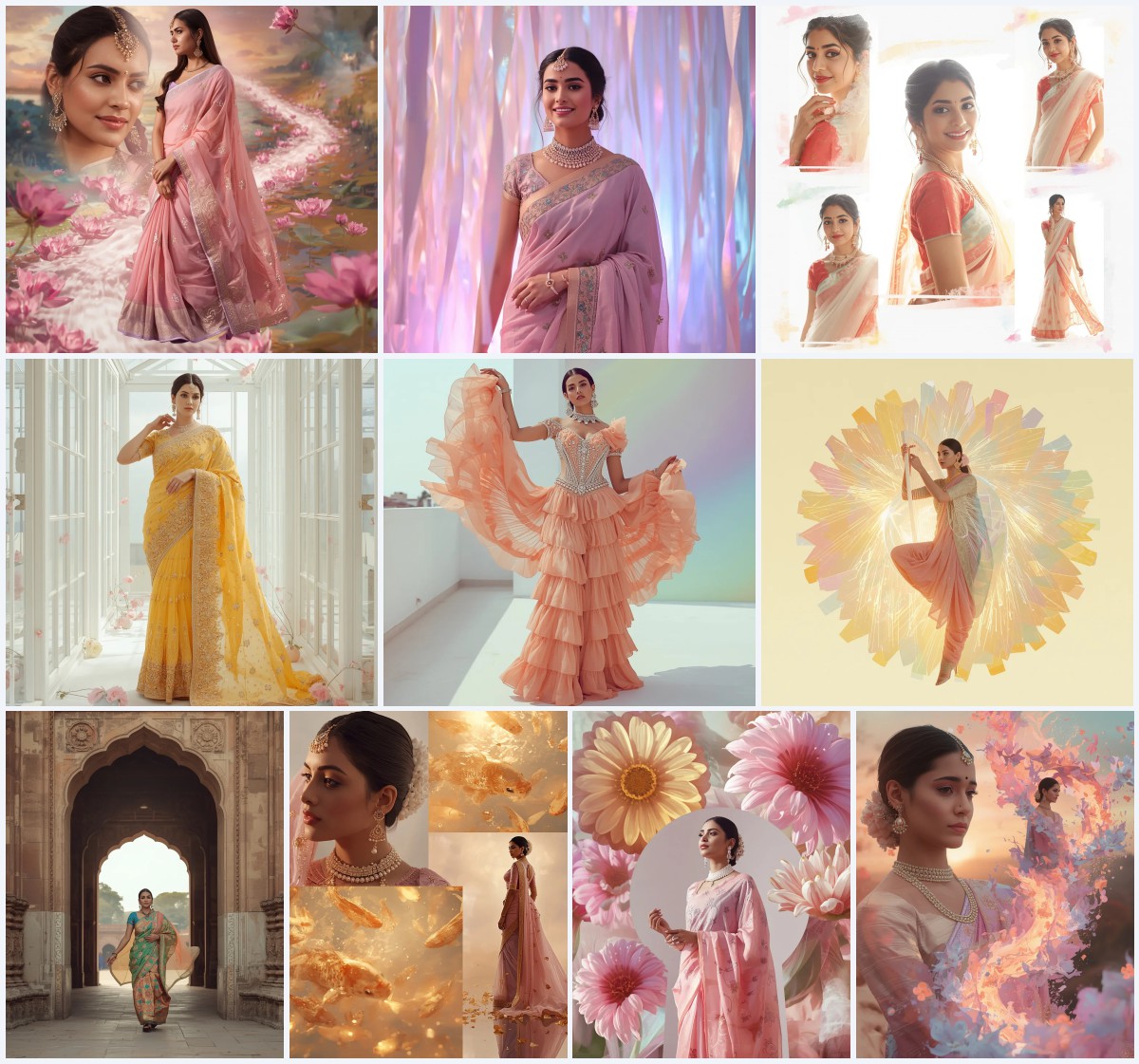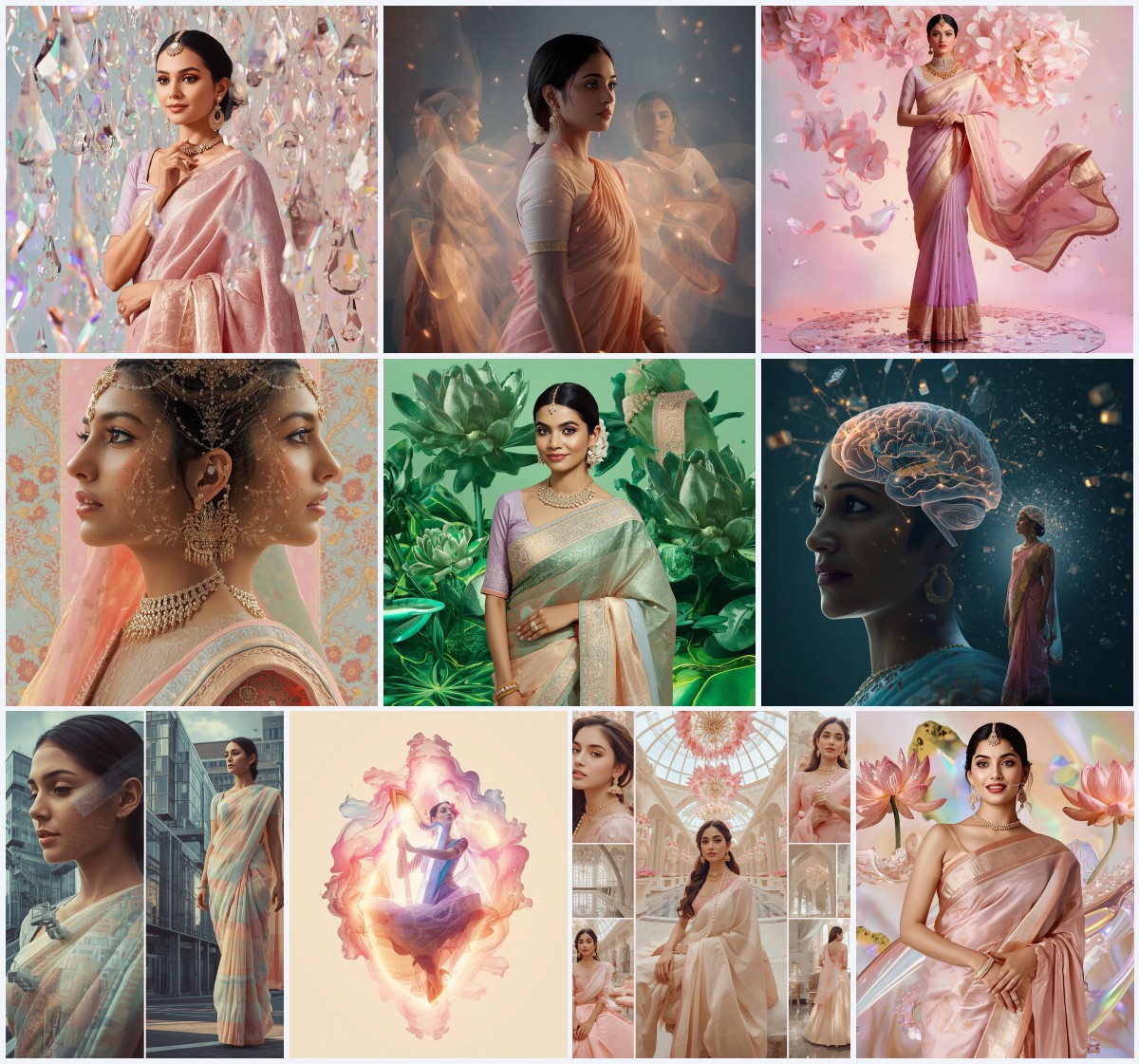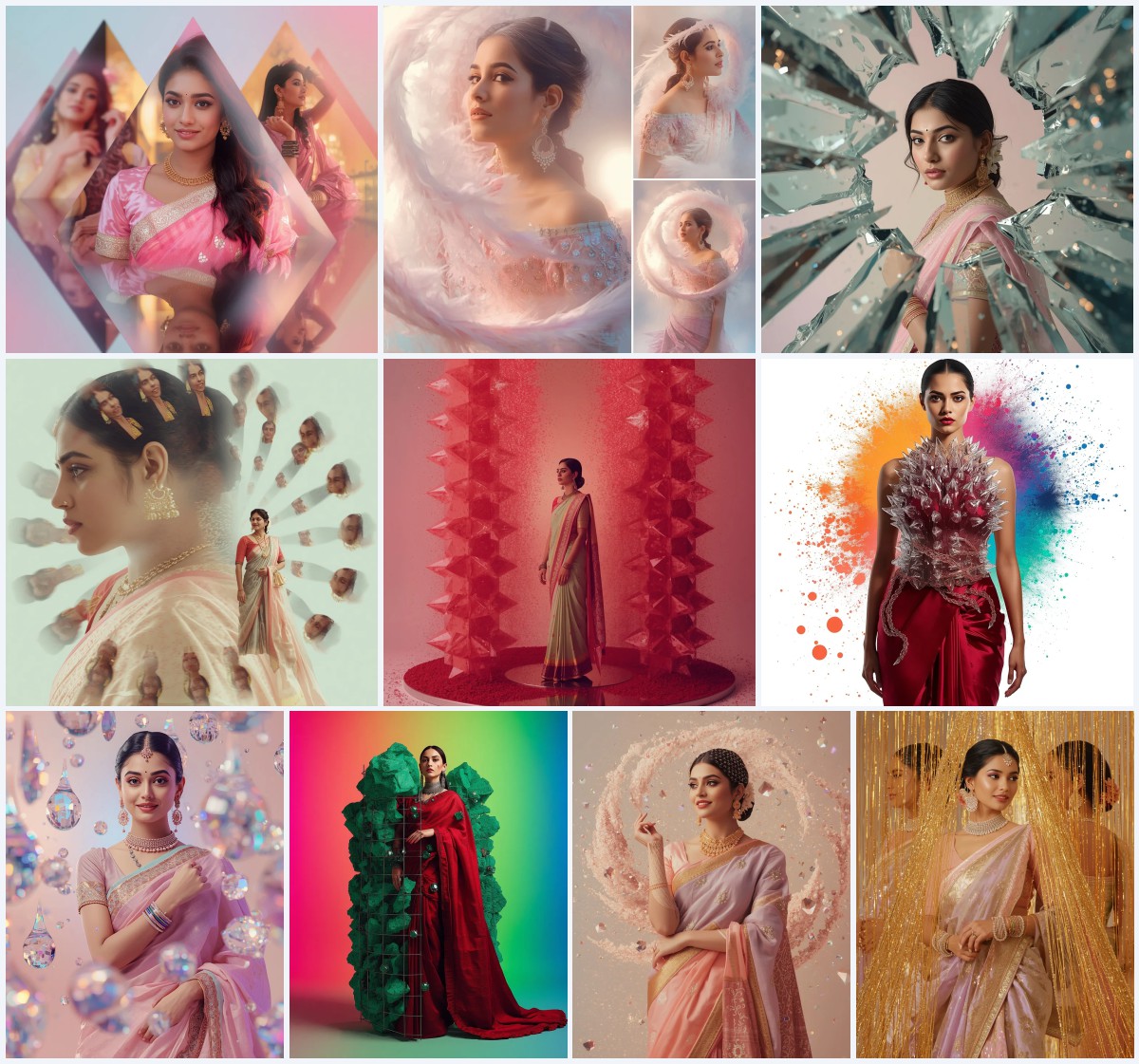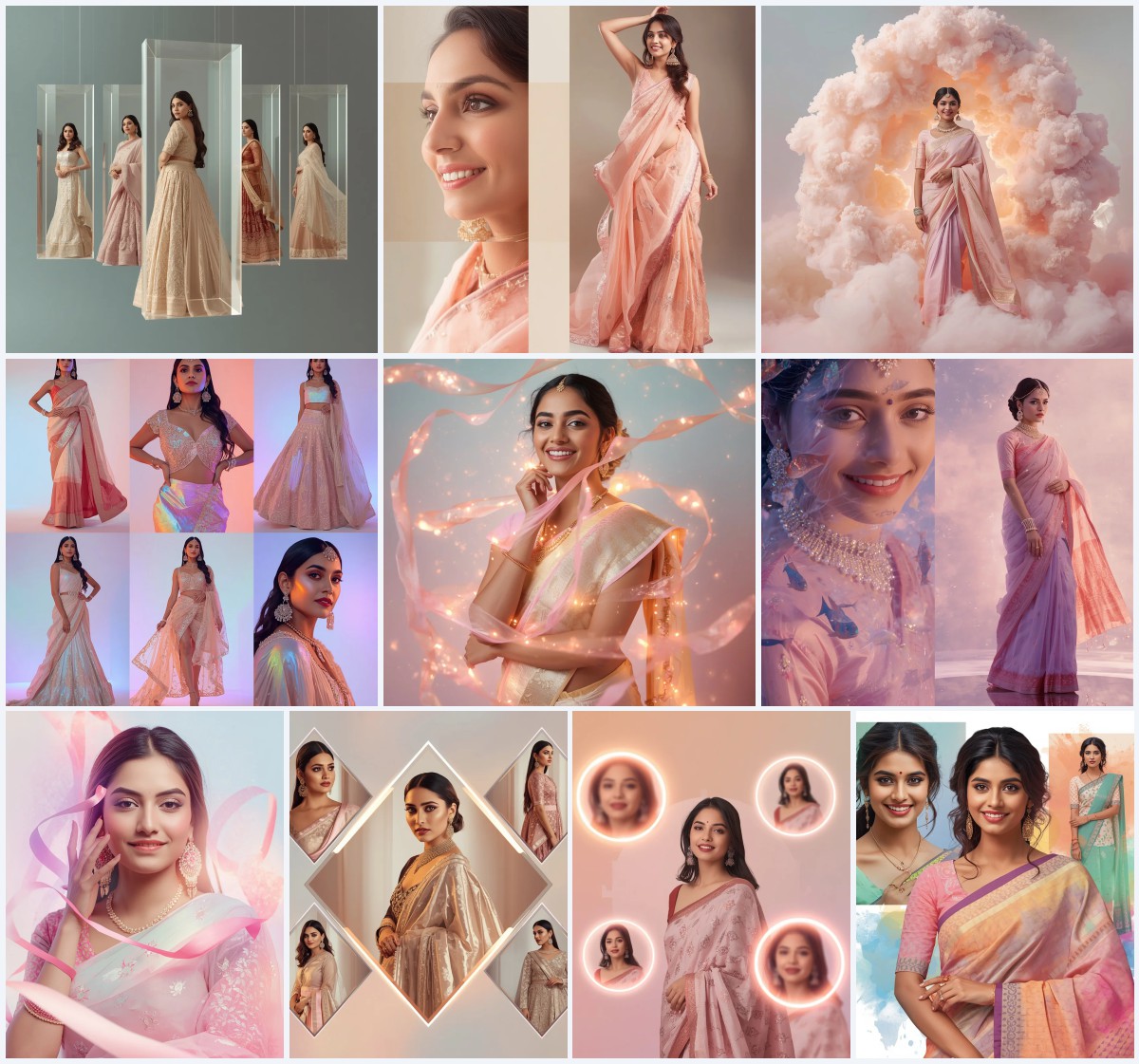
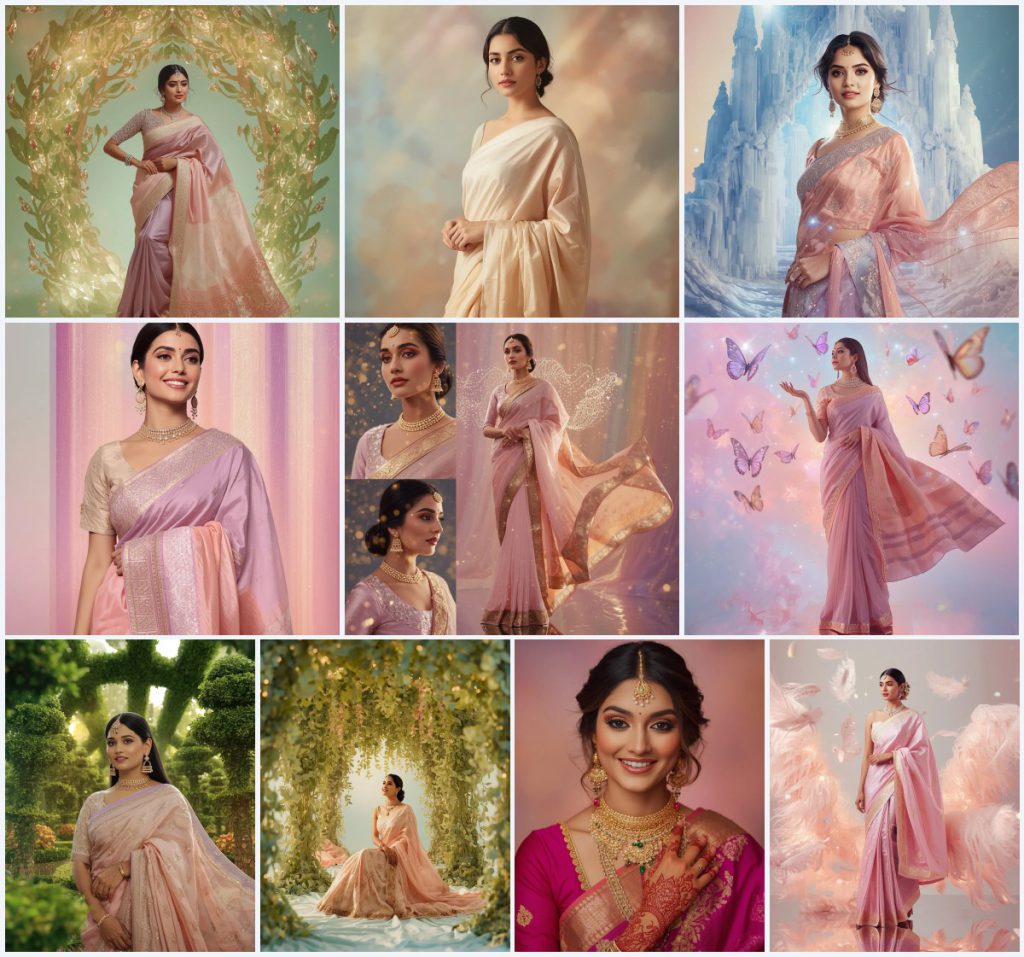


Unlock the ultimate collection of clear, descriptive English prompts designed to generate breathtaking AI images of women in traditional and fantasy-infused sarees.
Traditional Indian attire holds a timeless charm that has captivated artists and designers for centuries. With the rapid rise of generative artificial intelligence, capturing the sheer elegance, intricate folds, and luxurious textures of a traditional saree has become an exciting frontier for digital creators. However, translating the complex drape and exquisite details of a saree into clear English directions for AI engines can be a daunting task. This guide provides you with highly detailed, optimized formulas to create flawless saree imagery.
Whether you want to generate a realistic festive look or a surreal, fantasy-inspired masterpiece, the secret lies in the vocabulary you use. By describing the fabric weight, the embroidery styles, and the surrounding environment with precision, you can guide the AI to render stunning visuals that look like professional photoshoots. This article breaks down ten premium prompts that blend traditional Indian aesthetics with magical, modern, and ethereal backdrops.
From soft pastel Banarasi silks to vibrant fuchsia wedding wear, these prompts are tailored to deliver high-fidelity results. We will explore the mechanics behind these prompts, look at why this trend is taking social media by storm, and provide you with actionable steps to start generating your own masterpieces on your favorite AI platform today.
What Are Saree Prompts for Women?
Saree prompts for women are highly descriptive textual instructions used to guide artificial intelligence image generators in creating visuals of women wearing the traditional Indian saree. Unlike simple prompts that merely request a "woman in a saree," these advanced prompts specify the fabric type, such as handwoven Banarasi silk, the exact color palette, and the intricate embellishments like heavy gold zari borders, intricate gota patti pearl embroidery, and delicate sequin shimmer. They also define the physical behavior of the garment, instructing the AI on the natural realistic folds, pleats, wind movement, and subtle drape physics of the flowing pallu.
Furthermore, these prompts often place the subject in highly stylized environments. Instead of simple studio backdrops, they incorporate complex artistic themes—such as crystal tree groves, glacial cloud palaces, cascading chronal dust waterfalls, or magical swarms of bioluminescent fireflies. This combination of hyper-detailed cultural fashion and imaginative art direction is what makes these prompts incredibly powerful for digital artists, designers, and social media influencers alike.
Why Saree Prompts for Women Is Trending
The fusion of traditional South Asian fashion with high-concept digital art has sparked a massive trend across platforms like Instagram, Pinterest, and TikTok. Users are constantly seeking unique, culturally rich visuals that stand out in crowded feeds. The intricate details of a saree—its shimmering threads, delicate beadwork, and graceful drapes—provide a rich visual texture that AI models love to render. When combined with dreamlike, surreal elements, these images achieve a viral quality that captures the imagination of audiences worldwide.
Additionally, there is a growing demand for personalized digital avatars and festive greeting designs. Creators use these prompts to generate high-quality images for festivals, weddings, and cultural celebrations without the need for expensive physical photoshoots. The ability to instantly visualize a customized designer saree in a fantastical setting has democratized fashion design and digital portraiture, making this one of the most popular genres in AI image generation today.
Popular Styles You Can Create
Using our curated list of prompts, you can explore a wide variety of artistic styles. Here are some of the popular styles you can generate:
- Opulent Forest Dream: An Indian woman in a festive pastel saree (soft blush pink, lavender, peach) positioned amidst a vibrant, living grove of crystal trees.
- Ethereal Fantasy: A serene portrait set against a glacial cloud crystal palace or a cascading waterfall of shimmering chronal dust particles.
- Mystical Night: A magical nighttime scene featuring a woman surrounded by a glowing swarm of intensely bright bioluminescent fireflies or giant holographic butterflies.
- Surreal Botanical: Posing within a living topiary garden maze or beneath a vast, living canopy of intricately woven botanical lace.
- Classic Celebratory: A close-up portrait of a mid-20s woman in a vibrant fuchsia and gold-embroidered sari, showcasing intricate gold jewelry, a subtle bindi, and delicate henna patterns on her hands.
- Dreamy Abstract: A calm and poised woman against a softly blurred abstract background of swirling pastel colors and subtle light streaks.
How to Use Saree Prompts for Women
Getting the perfect image requires a systematic approach to prompting. Follow these seven steps to achieve the best results:
- Select Your Base Prompt: Choose one of the detailed prompts from our collection that matches your desired theme, such as the "Enchanted Firefly Swarm" or the "Glacial Cloud Crystal Palace."
- Customize the Colors: Modify the color descriptions. You can keep the default pastel shades (blush pink, lavender, peach) or swap them for vibrant colors like royal blue, emerald green, or fuchsia.
- Define the Fabric and Details: Ensure your prompt includes texture-rich terms like "handwoven Banarasi silk," "heavy gold zari borders," and "gota patti pearl embroidery" to give the saree a premium, realistic look.
- Specify Drape and Physics: Always include instructions for the drape, such as "natural realistic folds, pleats, wind movement, and subtle drape physics" to prevent the fabric from looking stiff or unnatural.
- Set the Scene and Lighting: Describe the environment and lighting clearly. Use terms like "diffused, artistic lighting," "warm natural light," or "glowing botanical sculptures" to set the mood.
- Choose Your AI Platform: Copy your customized prompt and paste it into your chosen AI image generator.
- Generate and Refine: Run the generator. If the details are not sharp enough, upscale the image to 8K or HDR, or refine the prompt by emphasizing the jewelry and fabric textures.
What Kind of Base Photo Works Best?
If you are using an AI tool that allows for image-to-image generation or face-swapping, starting with the right base photo is crucial. The base photo should feature a clear, high-resolution portrait of a woman with neutral, diffused lighting. Avoid harsh shadows or busy backgrounds that might confuse the AI when it attempts to blend the subject with the complex textures of the saree.
The pose in your base photo should also complement the flowing nature of the garment. A standing pose, a gentle hand gesture holding an imaginary fabric, or a serene over-the-shoulder look works exceptionally well. This helps the AI align the "flowing pallu" and "natural pleats" correctly, resulting in a seamless, professional-grade composition.
Which AI Tools Deliver the Best Results?
Different AI tools handle the complex geometries and textures of traditional Indian clothing in various ways. Here is a breakdown of how the top platforms perform when you paste these prompts into them:
| AI Tool | Strengths | Best Suited For |
|---|---|---|
| Midjourney | Unmatched rendering of fabric textures, silk sheen, and intricate embroidery. Excellent lighting. | High-fashion editorials, surreal fantasy collages, and hyper-realistic portraits. |
| Flux | Superb handling of complex structural details, realistic hand poses, and clear text rendering. | Detailed close-ups showcasing jewelry, henna, and precise saree pleats. |
| Leonardo | Great control over artistic styles, custom fine-tuned models, and vibrant color outputs. | Dreamy, abstract backgrounds and vibrant festive illustrations. |
| ChatGPT (DALL-E) | Extremely easy to use, understands conversational English, and follows complex scene descriptions well. | Quick prompt testing, conceptual layouts, and storyboarding. |
| Gemini | Quick generations, good color balance, and excellent integration with Google ecosystem tools. | Casual social media posts and quick creative brainstorming. |
Pro Tips
To elevate your AI-generated saree images to a professional standard, keep these pro tips in mind. First, always emphasize the jewelry. Traditional sarees look incomplete without matching accessories. Include phrases like "intricate gold jewelry," "subtle bindi," and "delicate henna patterns on her hands" to add cultural authenticity and visual richness. Second, pay close attention to the hair and makeup. Specifying "elaborately styled hair" or "festive makeup with a radiant expression" ensures the subject's face matches the grandeur of her outfit.
Another crucial tip is to utilize the power of negative prompting if your tool supports it. Explicitly exclude terms like "deformed hands," "stiff fabric," "blurry textures," and "clashing colors" to force the AI to focus on clean, high-fidelity outputs. Lastly, experiment with aspect ratios. A portrait ratio (such as 9:16) is ideal for showcasing the full length of the saree, the elegant drape of the pallu, and the overall posture of the subject, making it perfect for platforms like Instagram.
Common Issues and Quick Fixes
Generating complex garments like sarees can sometimes lead to rendering errors. Below is a guide to common issues and how to resolve them:
| Common Issue | Why It Happens | Quick Fix / Solution |
|---|---|---|
| Unnatural, stiff drape | The AI lacks instructions on how the fabric behaves in space. | Add terms like "subtle drape physics," "flowing pallu," and "natural realistic folds" to your prompt. |
| Muddled jewelry details | The prompt focuses too much on the background, ignoring accessories. | Use phrases like "close-up portrait showcasing intricate gold jewelry" and increase prompt weight on the accessories. |
| Clashing background colors | The background colors overpower the soft pastel tones of the saree. | Specify a "softly blurred, warm pastel gradient" or "abstract composition of swirling pastel colors" for the background. |
| Deformed hands and fingers | AI models struggle with rendering hands, especially during complex gestures. | Describe a simple, static gesture, such as "her hands gently holding the pallu," or use an AI tool with superior hand rendering like Flux. |
Frequently Asked Questions
How do I get realistic fabric folds in my AI saree images?
To achieve realistic folds, include specific physics terms in your prompt such as 'natural realistic folds', 'subtle drape physics', and 'flowing pallu with wind movement'.
Can I change the color of the saree in these prompts?
Yes, you can easily swap the pastel shades like blush pink, lavender, and peach for other colors like vibrant fuchsia or deep crimson while keeping the embroidery details intact.
Which AI tools work best for rendering intricate embroidery details?
Platforms like Midjourney and Flux excel at rendering high-fidelity texture details like gota patti pearl embroidery and heavy gold zari borders.
Conclusion
Creating stunning images of women in traditional sarees using artificial intelligence is an incredibly rewarding process. By using clear, descriptive English prompts that focus on fabric textures, drape physics, and imaginative backdrops, you can generate artwork that beautifully blends cultural heritage with modern digital aesthetics. Whether you are generating images for a personal portfolio, social media content, or festive designs, these prompts offer a reliable foundation for high-quality results. Start experimenting with these prompts on tools like Midjourney, Flux, or Leonardo today, and watch your creative visions come to life with unmatched clarity and elegance.