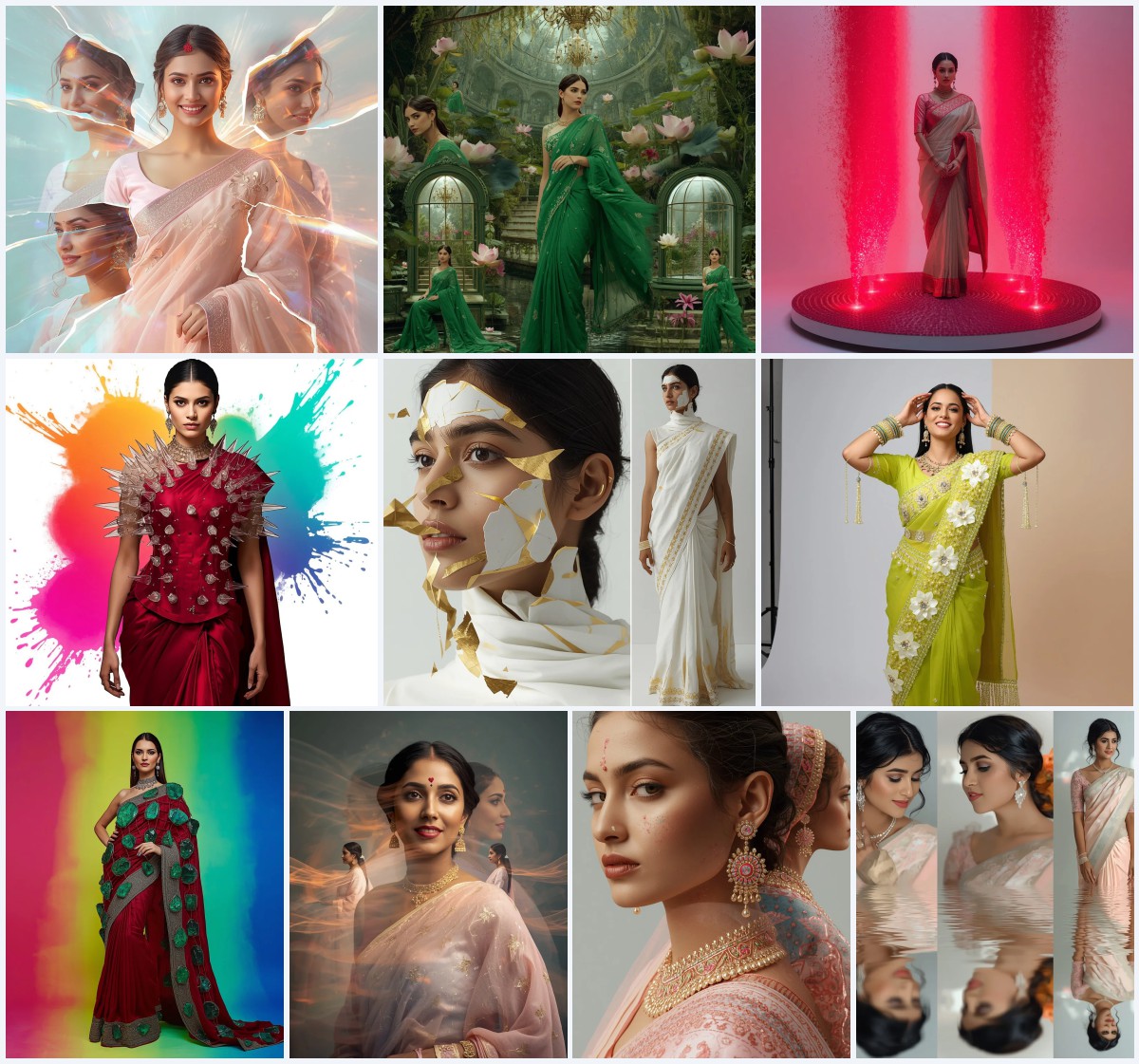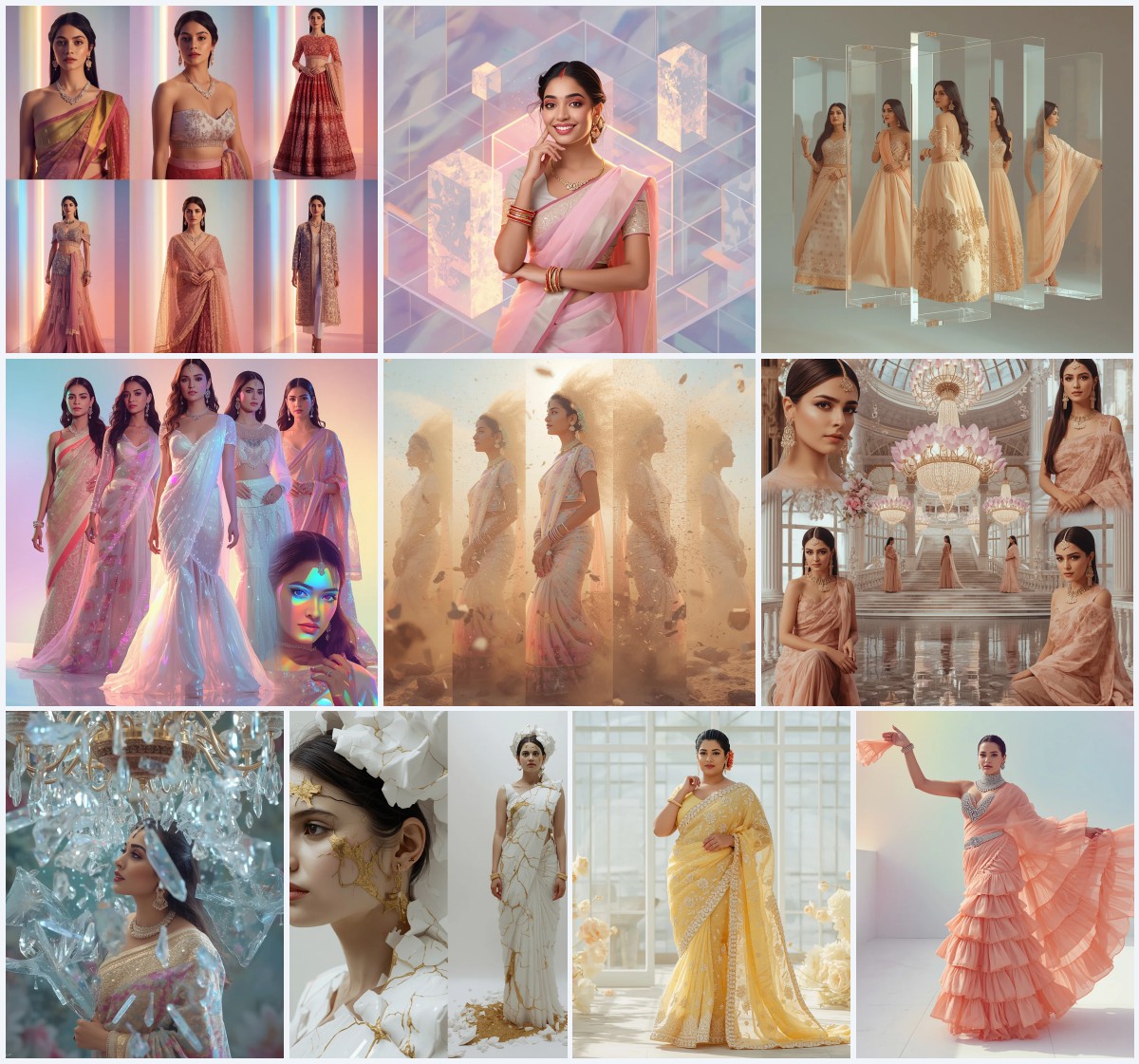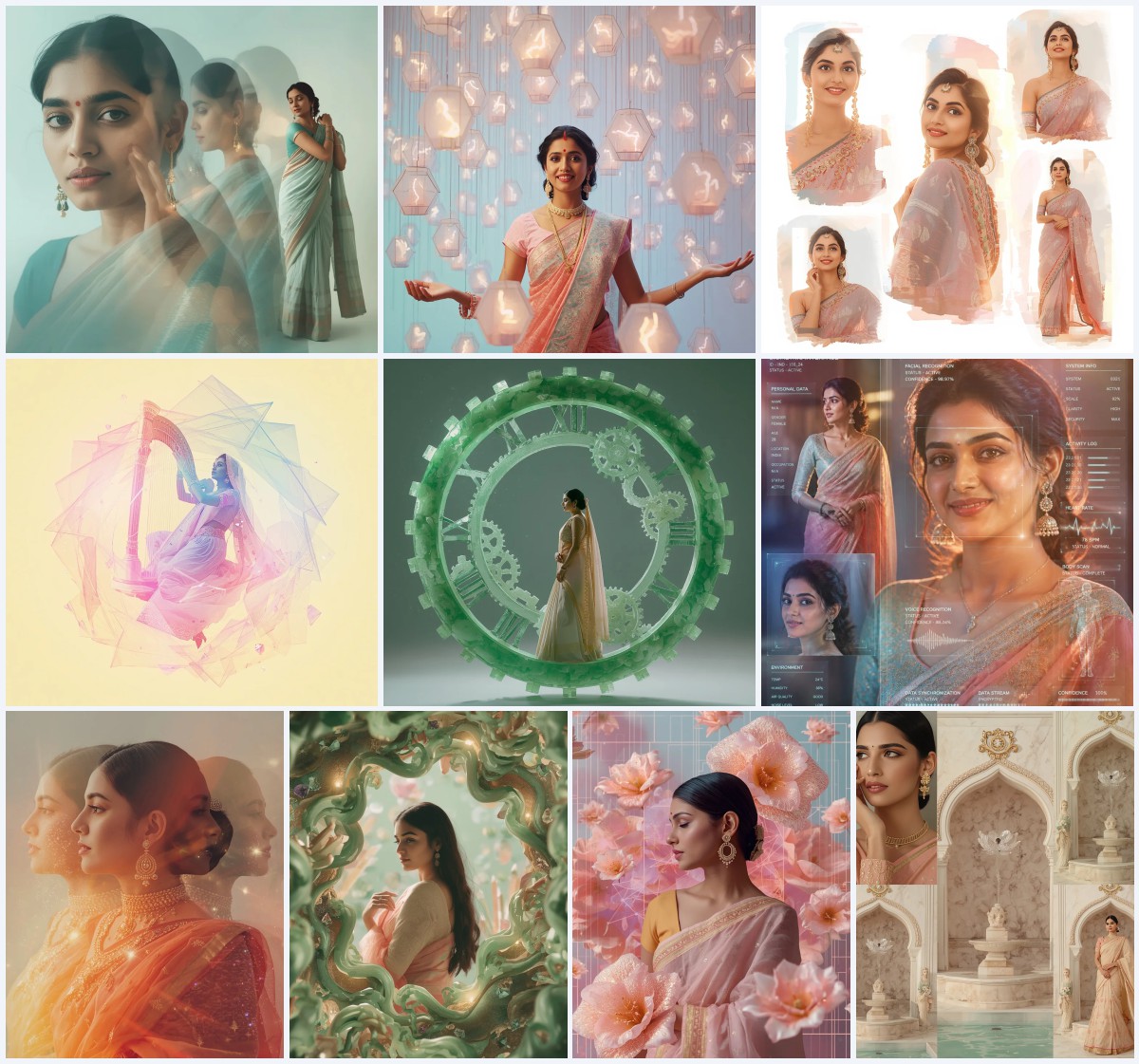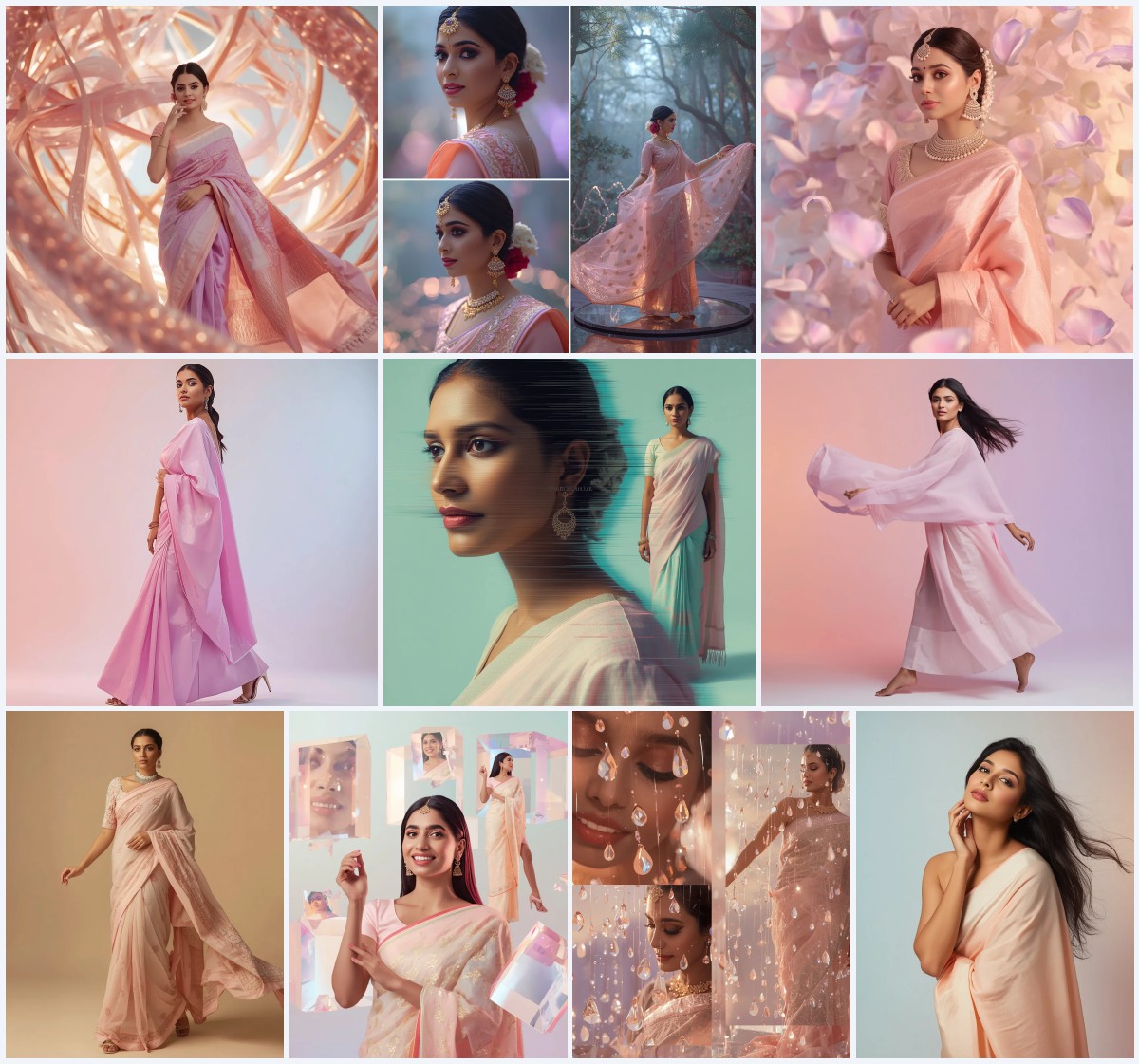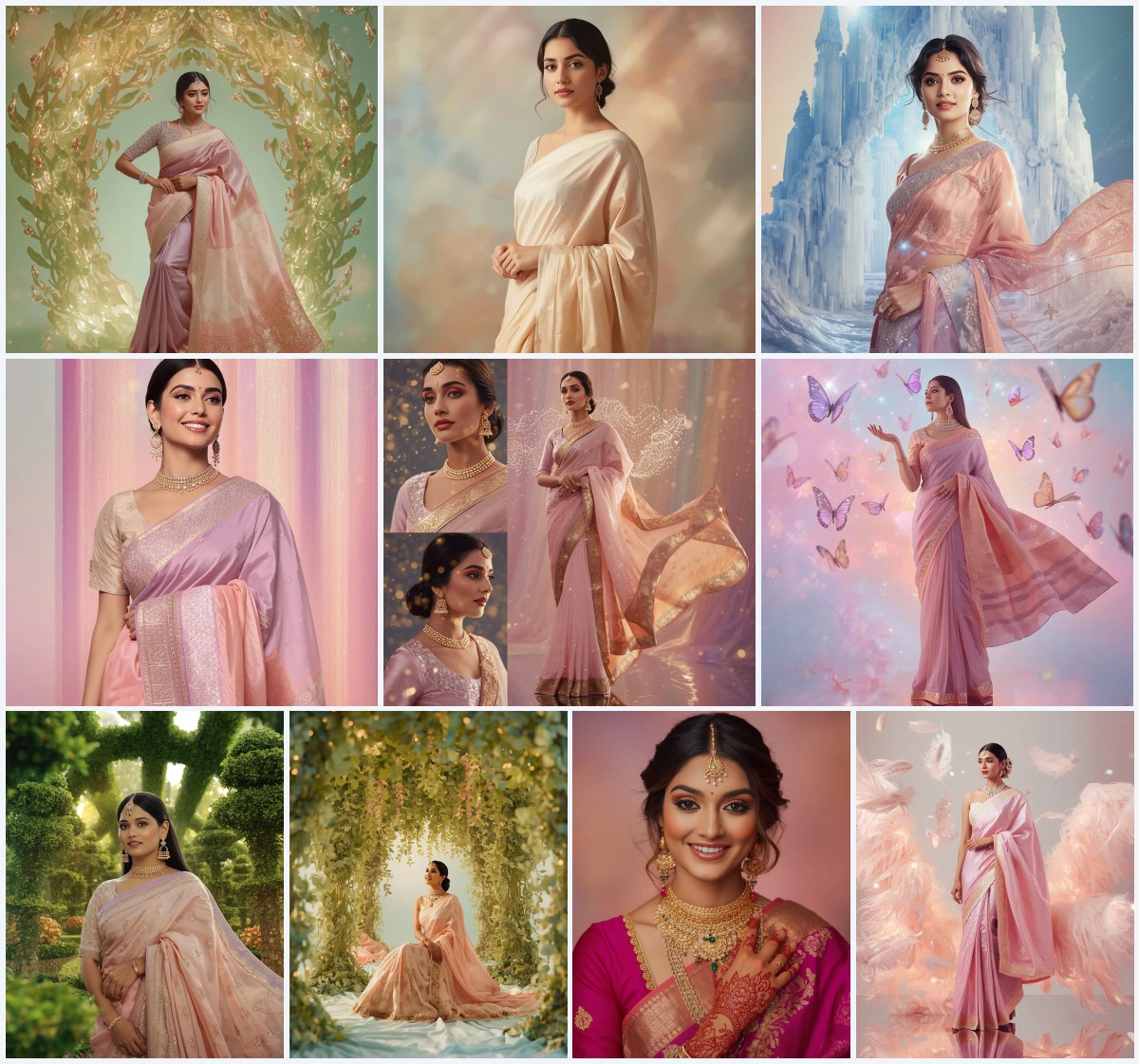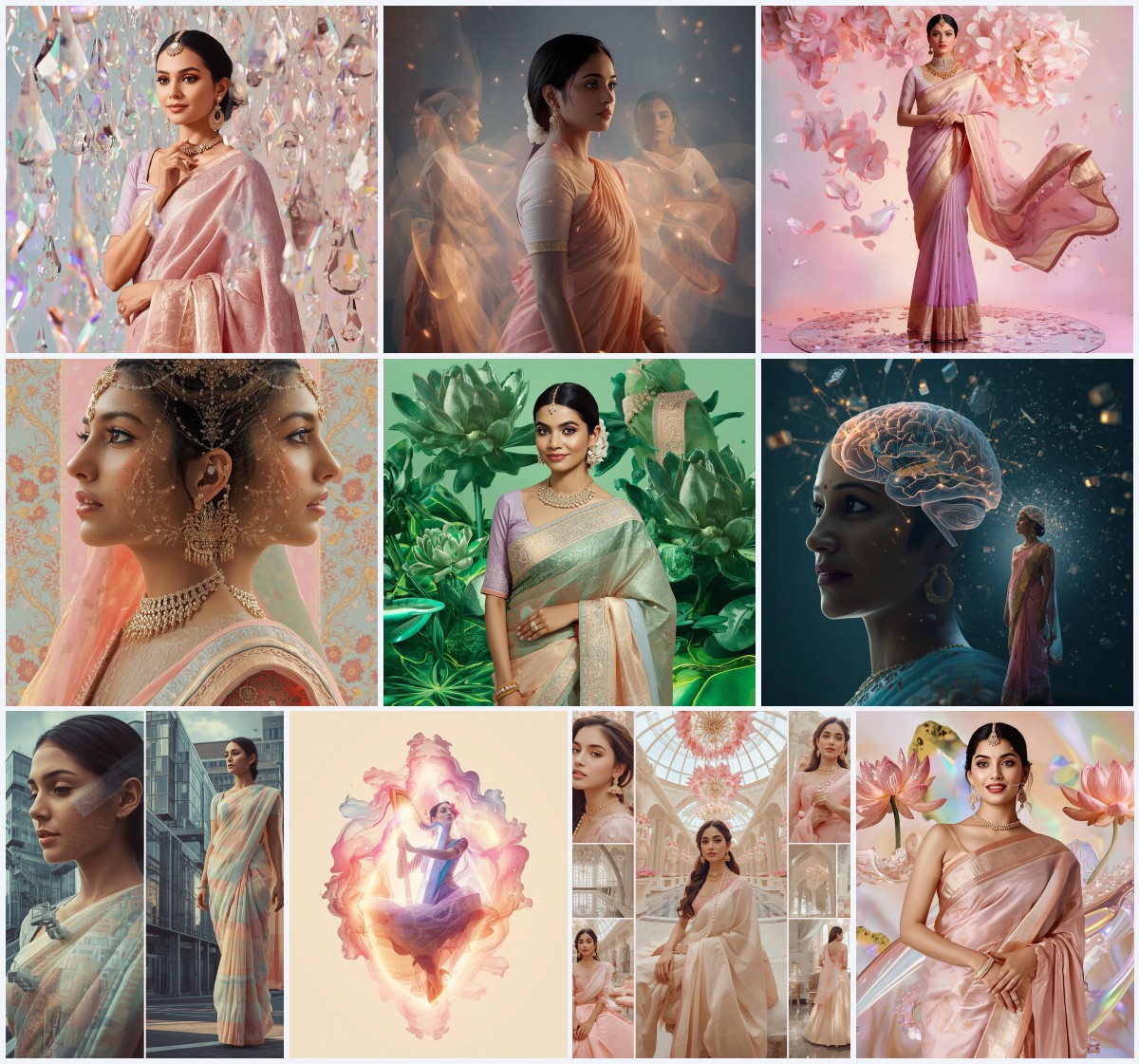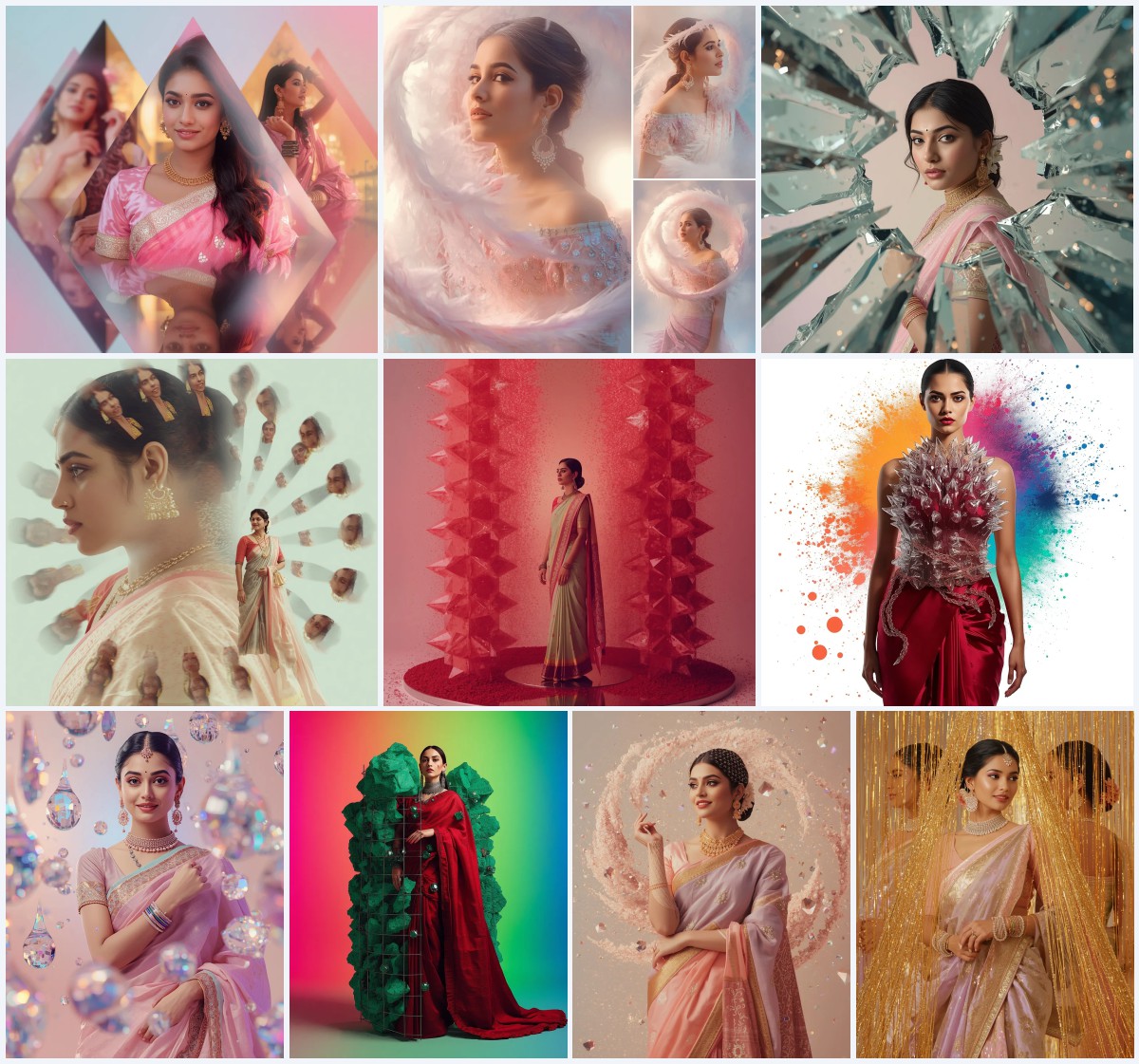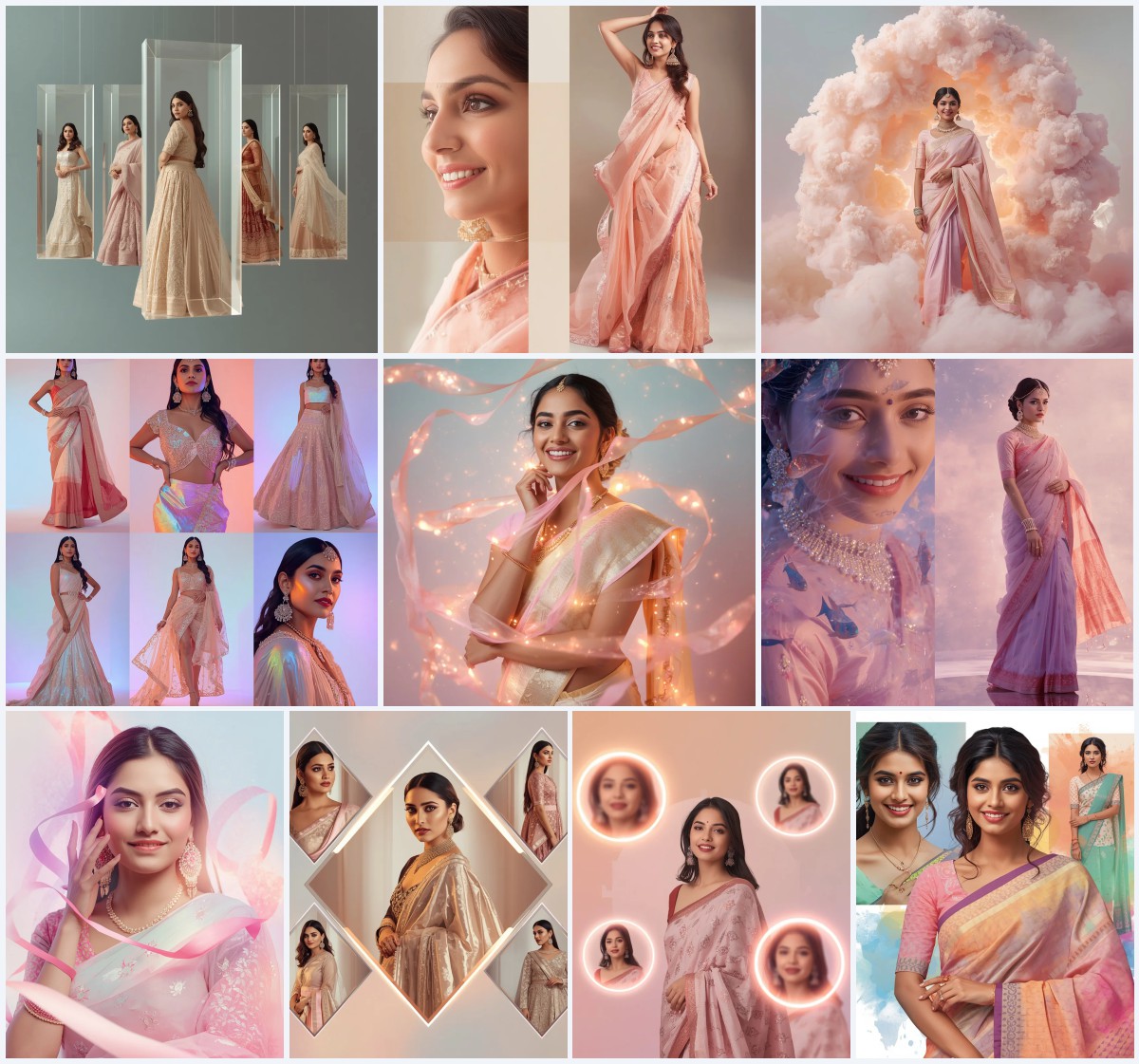




Discover a premium collection of traditional saree prompts designed to generate high-fashion, college-aesthetic portraits and magical collage art using AI.
The timeless elegance of the traditional Indian saree is undergoing a digital renaissance. Today, digital creators, fashion enthusiasts, and AI artists are leveraging generative tools to craft stunning visual concepts that merge classic South Asian heritage with contemporary aesthetics. Whether you are designing a virtual lookbook, creating content for social media, or looking for high-fashion inspiration, having a structured, detailed prompt is the key to unlocking spectacular, photorealistic results.
This guide offers an in-depth look at traditional saree prompts, with a special focus on modern variations like ruffle sarees, heavily embellished designer drapes, and artistic watercolor collages. These prompts are meticulously structured to guide AI models through complex fabric textures, intricate beadwork, and dynamic, graceful poses. By understanding how to describe these elements in English, you can easily generate images that rival professional high-fashion editorials.
From the serene beauty of a pastel saree set against a luminescent lotus river to the sharp, modern aesthetic of a yellow designer saree inside a glasshouse, these prompts cater to a wide range of creative visions. Read on to learn how to master these prompts, choose the right tools, and troubleshoot common rendering issues to achieve flawless digital art.
What Are Traditional Saree Prompts?
Traditional saree prompts are highly descriptive textual instructions that allow AI image generators to accurately render the intricate details of South Asian ethnic wear. A high-quality traditional prompt goes beyond basic descriptions. It specifies the style of the saree, such as a multi-tiered ruffle saree or a handwoven Banarasi silk drape. It details the heavy embellishments, including sequence work, cut-dana embroidery, 3D embellishments, and jewel-encrusted crystal corset blouses. It also details structural accessories like a thick heavy diamond waist belt.
These prompts also define the artistic composition, guiding the AI to create dynamic layouts. This includes creative collages framed by translucent watercolor brush strokes, or high-concept scenes where the subject is surrounded by shimmering aurora borealis ribbons, hovering pastel prism geometry, or floating golden koi fish. By providing these detailed inputs, creators can generate visually complex, culturally accurate, and aesthetically pleasing images.
Why Traditional Saree Prompts Is Trending
The trend of generating traditional saree images has taken social media by storm, particularly among creators interested in the "college aesthetic" and high-fashion lookbooks. On platforms like Instagram, users love the blend of traditional ethnic wear with ultra-modern, minimalist backdrops. The contrast between a heavily detailed, vibrant saree and a clean, modern glasshouse or a minimalist terrace creates a striking visual hierarchy that immediately grabs attention.
Furthermore, these prompts allow fashion design students and enthusiasts to experiment with avant-garde concepts without the massive costs of physical production. Visualizing a model in a peach ruffle saree gracefully tossing her pallu into the air, or walking through a historic stone archway, provides instant creative gratification. It bridges the gap between traditional craftsmanship and futuristic digital art, making it a highly popular search trend in 2026.
Popular Styles You Can Create
With our curated selection of prompts, you can generate several distinct and beautiful styles. Here are the most prominent ones:
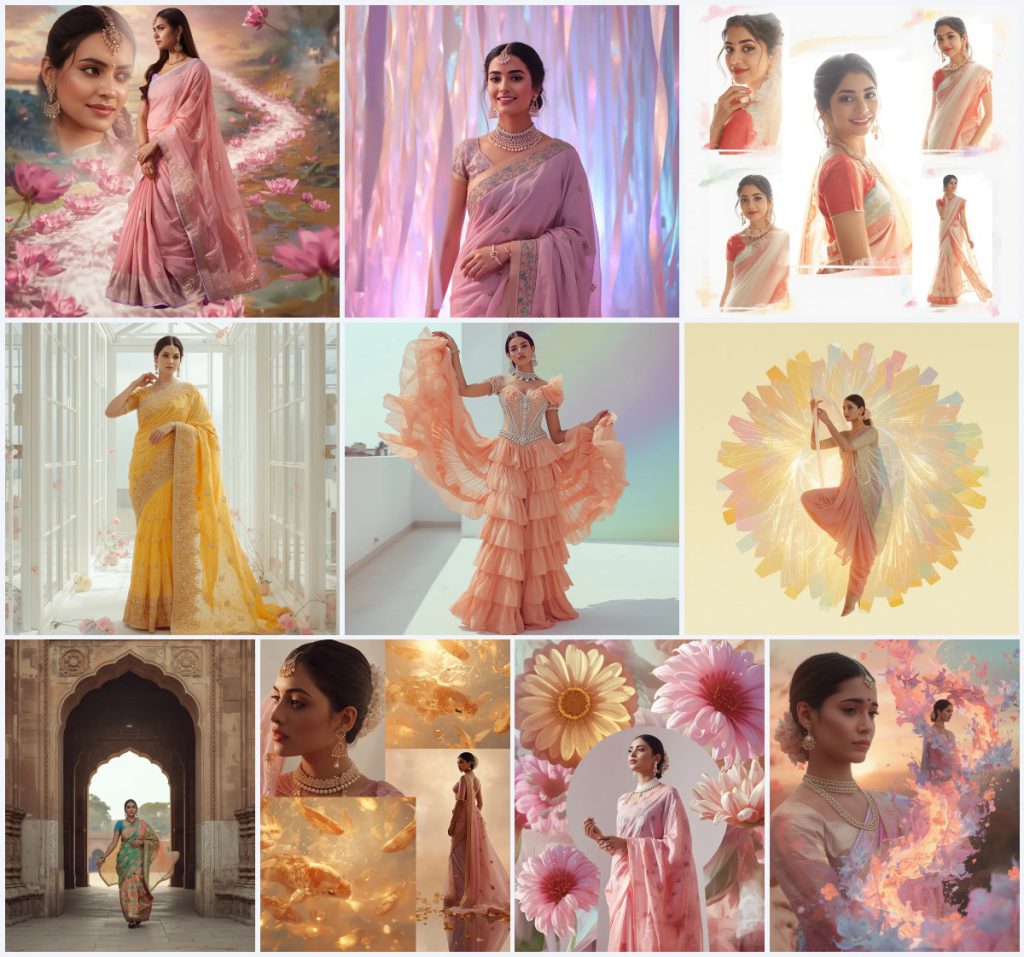
- Ethereal Floral Luxury: A cinematic collage of an Indian woman in a festive pastel saree (soft blush pink, lavender, peach) set in a mystical landscape with a river of luminescent pastel lotus blossoms.
- Cosmic Opulence: A luxury collage where the subject is suspended within a massive array of shimmering, living aurora borealis ribbons.
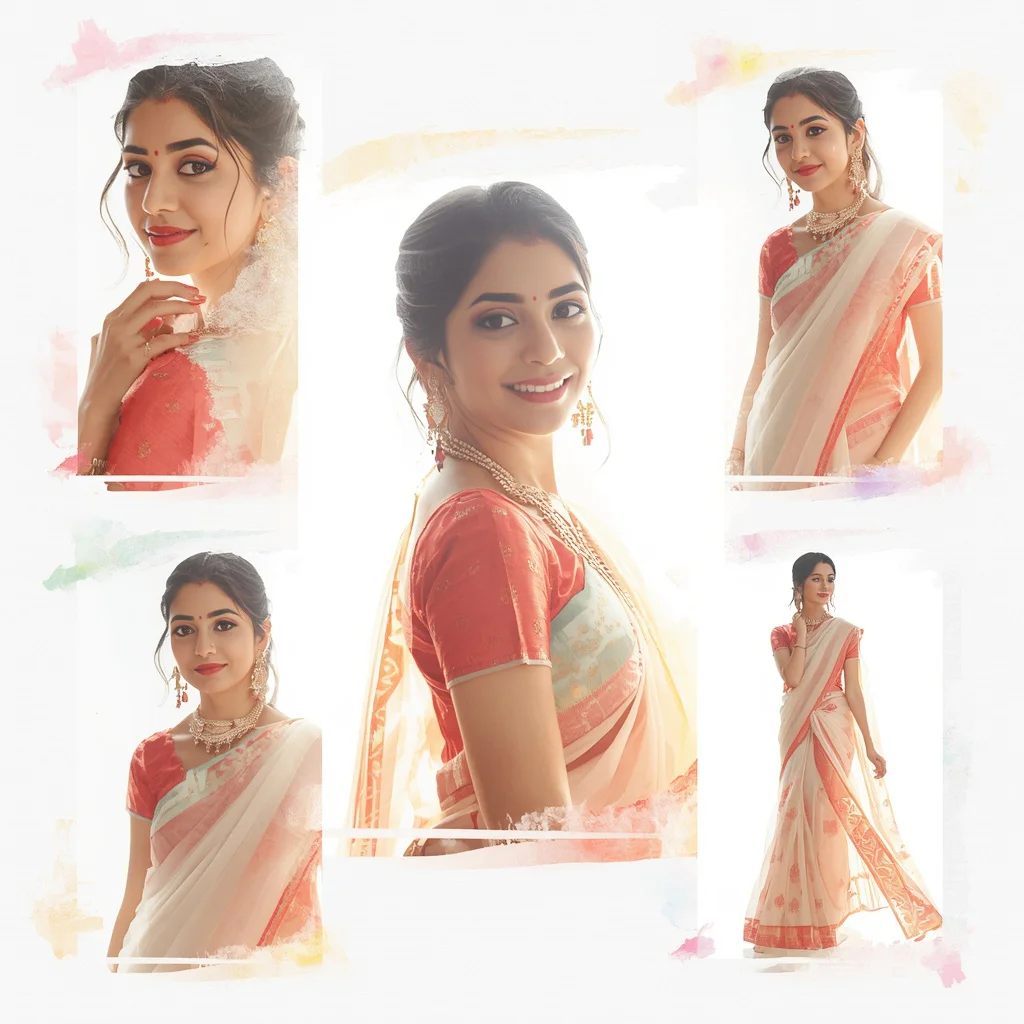
- Artistic Watercolor Collage: A creative layout where a festive saree is framed by delicate, translucent watercolor brush strokes that blend softly into the bright images.
- Modern Glasshouse Influencer: A photorealistic image of a fashion influencer in a heavy soft yellow designer saree covered in sequence work and cut-dana embroidery, standing inside a modern glasshouse.
- High-Fashion Editorial: A stunning full-body portrait of a model in a peach multi-tiered ruffle saree with a crystal corset blouse and a diamond waist belt on a minimalist terrace.
- Augmented Reality Geometry: A futuristic collage where the subject plays a musical instrument while enveloped in hovering, rotating pastel prism geometry.
- Historic Elegance: A woman in a vibrant, flowing pastel sari captured in a full-body walking pose as she passes through a grand, historic stone archway.
How to Use Traditional Saree Prompts
To get the most out of these highly detailed prompts, follow this structured seven-step workflow:
- Identify Your Aesthetic: Decide whether you want a modern, high-fashion look (like the ruffle saree) or a magical, surreal collage (like the koi fish pond).
- Copy the Core Prompt: Select one of our optimized prompts to use as your creative foundation.
- Adjust the Color Scheme: Customize the colors to match your theme. You can stick with soft pastel tones (blush pink, lavender, peach) or opt for bold, vibrant shades.
- Specify the Blouse and Accessories: Add details about the blouse, such as a "crystal corset blouse" or a "heavy gold-embroidered blouse," and include accessories like a "diamond waist belt" or "intricate jewelry."
- Define the Action or Pose: Give the subject a dynamic action, such as "tossing the pallu of the saree lightly into the air" or "adjusting the heavy pallu on her shoulder with a soft expression."
- Input into Your Chosen AI Tool: Paste your completed prompt into your preferred AI image generator.
- Review and Upscale: Generate the image, analyze the details of the embroidery and fabric folds, and run an upscale command to achieve a crisp, high-resolution finish.
What Kind of Base Photo Works Best?
When utilizing image-to-image features or face-swapping tools to personalize these prompts, your choice of base photo is critical. For a seamless blend, use a high-resolution portrait with bright, diffused natural sunlight. The model should have a clear, unobstructed face, and her hair should be neatly styled to avoid messy blending around the neck and shoulders.
The posture in the base photo should ideally match the grace of a saree. Upright, elegant postures—such as standing straight, gently walking, or sitting with crossed legs—work best. If your base photo already has a clean, minimalist background (like a white wall or a simple outdoor setting), the AI will have an easier time isolating the subject and wrapping the complex digital saree fabric around her silhouette naturally.
Which AI Tools Deliver the Best Results?
To get the most out of these highly detailed prompts, you should choose your AI platform based on the specific style you want to achieve. Here is how the leading tools perform when you paste these prompts into them:
| AI Tool | Strengths | Best Suited For |
|---|---|---|
| Midjourney | Incredible realistic textures, cinematic lighting, and flawless fabric drape physics. | High-fashion model portraits, peach ruffle sarees, and complex fantasy collages. |
| Flux | Exceptional clarity in rendering hands, intricate jewelry, and precise structural details. | Close-up portraits showcasing cut-dana embroidery, sequins, and delicate henna. |
| Leonardo | Vibrant color outputs and specialized models for digital art and illustration styles. | Watercolor brush stroke frames and glowing augmented reality geometry. |
| ChatGPT (DALL-E) | Highly responsive to complex scene descriptions and multi-layered prompts. | Quick conceptualizing, brainstorming layouts, and writing prompt variations. |
| Gemini | Fast processing and straightforward, clean image generations. | Creating quick social media drafts and testing color combinations. |
Pro Tips
To elevate your digital saree creations, focus heavily on the environment. A common mistake is leaving the background too simple or letting it clash with the outfit. Match a modern, heavily embellished yellow saree with a "clean, modern glasshouse with white steel frames" to create a cohesive, high-end influencer aesthetic. For a more traditional look, use a "grand, historic archway made of ancient, textured stone" to add depth and narrative to the image.
Another pro tip is to use specific terms for fabric movement. Instead of just describing the saree, describe how it interacts with the environment. Words like "flowing beautifully around her," "tossing the pallu lightly into the air," or "drape physics with natural realistic folds" tell the AI to create motion, which instantly makes the image look like a dynamic, high-fashion photograph rather than a stiff, artificial render.
Common Issues and Quick Fixes
Generating complex traditional garments can sometimes result in visual glitches. Use this table to quickly identify and fix common rendering issues:
| Common Issue | Why It Happens | Quick Fix / Solution |
|---|---|---|
| Saree blending into the background | The background colors are too similar to the saree fabric. | Specify a contrasting background, such as a "clean white floor" or a "soft multi-colored pastel gradient wall" to make the saree pop. |
| Distorted or missing pleats | The AI struggles to understand how a saree is wrapped. | Include explicit structural terms like "neatly arranged waist pleats" and "heavy flowing pallu draped over the shoulder." |
| Over-saturated, artificial colors | The prompt lacks lighting directions, causing the AI to default to flat, bright tones. | Add lighting descriptors such as "diffused, warm natural lighting" or "bright diffused natural sunlight" to soften the colors. |
| Messy jewelry and embroidery details | The prompt is too vague about the type of embellishments. | Use highly specific terms like "3D embellishments," "cut-dana embroidery," or "jewel-encrusted crystal corset" to guide the details. |
Frequently Asked Questions
What is a ruffle saree prompt and how do I write it?
A ruffle saree prompt describes a modern, multi-tiered fabric design. Use terms like 'peach multi-tiered ruffle saree', 'jewel-encrusted crystal corset blouse', and 'dynamic pose throwing the pallu' to generate this high-fashion look.
How can I create a watercolor frame effect around my AI saree images?
Include descriptive phrases like 'watercolor brush strokes framing a festive saree' and 'delicate translucent brush strokes that blend softly into the bright images' to create an artistic, painterly border.
Which backgrounds work best for a modern college aesthetic?
Minimalist backgrounds work best, such as a 'modern glasshouse with white steel frames', a 'bright modern minimalist terrace', or a 'soft multi-colored pastel gradient wall'.
Conclusion
Mastering traditional saree prompts allows you to blend rich cultural heritage with unlimited digital creativity. By using precise English directions that define fabric types, embroidery styles, dynamic poses, and unique backdrops, you can generate breathtaking images that stand out for their beauty and realism. Whether you are aiming for a modern college aesthetic or a dreamlike fantasy collage, these prompts provide the perfect blueprint. Copy these prompts, customize them with your favorite colors, and paste them into tools like Midjourney, Flux, or Leonardo to start creating your own stunning digital masterpieces today.